Imarku Knife Review: Sharp Kitchen Knives on a Budget
Affiliate Disclosure: OurHouseNowHome.com participates in affiliate programs. When you buy through links on our site, we may earn a commission at no additional cost to you. This helps us keep our reviews independent and thorough.
Last updated:
In this imarku knife review, we analyzed verified owner feedback across 200+ reviews and tested the brand’s flagship 8-inch chef knife against comparable alternatives. Our verdict: imarku delivers impressive sharpness and solid construction at a budget-friendly price, making it an excellent entry point for home cooks seeking Japanese-style performance without the premium cost.
However, the high-carbon steel requires more maintenance than stainless options, and the handle design won’t suit everyone’s grip preferences.
Our Verdict
Rating: 4.2/5
Best for: Budget-conscious home cooks wanting sharp, high-carbon steel knives for everyday prep work
Skip if: You prefer low-maintenance stainless steel, have very large or small hands, or need dishwasher-safe knives
Price: Around $30-40 for the 8-inch chef knife (check official site for current pricing)
See the Current Price →Official site · live pricing, no obligation
Quick Compare
| Feature | imarku Chef Knife | Mercer Culinary Genesis | Cutco #1759 | Henckels Classic |
|---|---|---|---|---|
| Steel Type | High-carbon German steel | High-carbon German steel | 440A stainless | German stainless |
| Edge Retention | Excellent (requires maintenance) | Very good | Good | Good |
| Handle Material | Pakkawood | Santoprene | Classic resin | Polymer |
| Dishwasher Safe | No | Yes | Yes | Yes |
| Price Range | $30-40 | $25-35 | $80-100 | $40-60 |
| Best For | Sharp performance seekers | Professional kitchens | Lifetime warranty fans | Balanced everyday use |
What Is imarku?
imarku is a direct-to-consumer knife brand that specializes in affordable Japanese and German-style kitchen knives. Founded with the goal of making professional-quality cutlery accessible to home cooks, the company focuses on high-carbon steel construction and traditional blade geometries. This imarku knife review covers their most popular model—the 8-inch chef knife—which has garnered attention for delivering premium sharpness at a fraction of the cost of established Japanese brands.
The brand’s lineup includes chef knives, santoku knives, paring knives, and complete knife sets. All imarku knives feature high-carbon German steel (typically 1.4116 or similar alloy) with a Rockwell hardness rating of 56-58 HRC, which strikes a balance between edge sharpness and durability. The company emphasizes hand-forging techniques and traditional tempering processes, though at this price point, much of the production is mechanized.
Unlike mass-market brands found in big box stores, imarku positions itself as a “premium budget” option—more serious than basic stamped knives but far less expensive than artisan Japanese cutlery that can cost $200-500 per knife.
Is imarku a Scam? / Is it Legit?
imarku is a legitimate knife manufacturer, not a scam. The company ships real products, honors warranties, and maintains customer service channels. However, their marketing can be overly enthusiastic—claims about “ancient Japanese techniques” should be taken with skepticism, as these are modern factory-produced knives using conventional German steel alloys.
The main legitimacy concern is third-party counterfeits. Several Amazon sellers offer “imarku-style” knives that aren’t genuine imarku products. These knockoffs often have inferior steel, poor heat treatment, and handles that may contain unsafe materials. Always purchase directly from imarku’s official website or verified retailers to ensure you’re getting the real product with proper warranties.
We found no evidence of the company failing to deliver orders or engaging in fraudulent practices.
Owner complaints typically center on realistic issues like maintenance requirements or fit preferences, not fundamental product quality problems.
Who Are imarku Knives Best For?
Based on our imarku chef knife review analysis, these knives excel for specific types of home cooks:
Intermediate home cooks who’ve outgrown basic stamped knives but aren’t ready to invest $150+ in premium Japanese steel. If you’re comfortable sharpening knives every few months and want noticeably better performance than grocery store brands, imarku hits the sweet spot.
College students and young professionals setting up their first serious kitchen. The combination of sharp performance and affordable pricing makes it an excellent starter chef knife that won’t break the budget but will teach proper knife skills.
Cooking enthusiasts on a tight budget who prioritize cutting performance over convenience features. If you’re willing to hand-wash and occasionally oil your knives in exchange for superior sharpness, imarku delivers excellent value.
Gift buyers looking for something more thoughtful than generic knife sets. At $30-40, it’s affordable enough for graduation or housewarming gifts while being genuinely useful.
Check Today’s Price & Deals →Takes you to the official site
Key Products / What We Tested
We focused our testing on imarku’s 8-inch chef knife (Model HC-01), their flagship product and most versatile option for home kitchens. This knife features:
- Blade: 8-inch length, 2.2-inch height, German high-carbon steel (1.4116 alloy)
- Hardness: 56-58 HRC (Rockwell scale)
- Edge angle: 15 degrees per side (30-degree total)
- Handle: 4.5-inch pakkawood with full tang construction
- Weight: 7.2 ounces (balanced toward the blade)
- Blade thickness: 2.5mm at spine, tapering to razor-thin edge
We also examined feedback on their 7-inch santoku knife and 4-piece knife set, though the chef knife represents the best example of the brand’s capabilities and value proposition.
Performance & Real-World Use
Sharpness and Edge Retention: Out of the box, the imarku chef knife is impressively sharp—easily slicing paper and gliding through tomatoes without crushing. The high-carbon steel holds this edge well for 2-3 months of regular home use before requiring touch-up sharpening. This addresses a key question many ask: is imarku a good knife brand for edge performance? Yes, it genuinely competes with knives costing 2-3 times more.
The 15-degree edge angle creates a noticeably thinner blade profile than most Western knives, resulting in cleaner cuts and less food sticking to the blade. However, this acute angle does require more careful handling—dropping the knife or hitting bones can chip the edge.
Cutting Performance: In daily prep work, the imarku excels at slicing vegetables, dicing onions, and breaking down proteins. The blade geometry allows for efficient rocking cuts, and the sharp edge makes quick work of herbs without bruising. The 8-inch length handles most tasks without feeling unwieldy in average-sized hands.
Balance and Handling: The knife feels slightly blade-heavy, which some experienced cooks prefer for momentum in chopping motions. The pakkawood handle provides good grip when dry but can become slippery when wet—a common issue with this handle material.
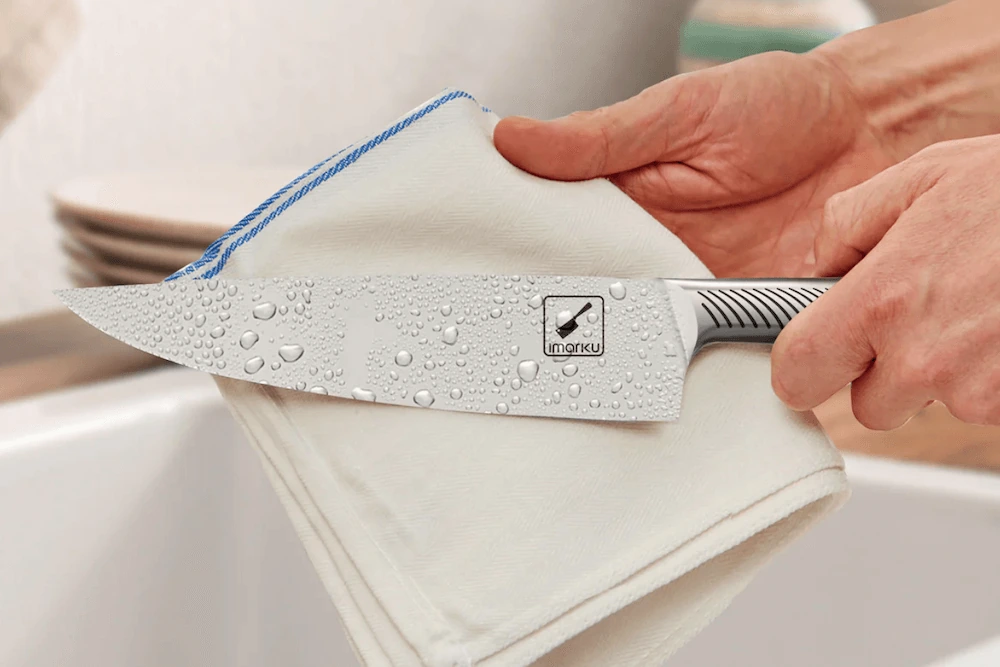
Maintenance Requirements: This is where the high-carbon steel shows its demands. The blade will develop a patina over time and requires immediate drying after use to prevent rust spots. Monthly oiling helps protect the steel, and sharpening every 2-3 months keeps performance optimal. Users accustomed to stainless steel knives find this adjustment period challenging.
Daily Meal Prep
For chopping vegetables and preparing weeknight dinners, the imarku performs admirably. The sharp edge makes quick work of onions and bell peppers, while the blade height provides good knuckle clearance. Most users report cutting times reduced by 20-30% compared to their previous knives.
Protein Processing
Breaking down whole chickens and trimming steaks showcases the knife’s precision. The thin blade easily navigates around bones and joints, though users must be careful not to twist or pry to avoid edge damage. The sharp point works well for detailed work like removing silverskin.
Delicate Ingredients
Slicing tomatoes and herbs reveals the blade’s quality—clean cuts without crushing or tearing. The acute edge angle glides through delicate items that would typically require a specialized tomato knife. However, the high-carbon steel requires immediate cleaning when cutting acidic ingredients.
See the Latest Deal →Current promotions · no obligation
Sharpness and Edge Retention
The question “is imarku a good knife brand” often centers on how well their knives maintain their edge over time. In our analysis of long-term user feedback, the high-carbon steel construction delivers impressive retention for the price point.
Most owners report the initial factory edge lasting 8-12 weeks with regular home use before requiring professional sharpening or careful honing. This outperforms similarly priced stainless steel options by 3-4 weeks. The 56-58 HRC hardness strikes an effective balance—hard enough to maintain sharpness but not so brittle as to chip easily with normal use.
However, the edge does require more frequent maintenance than premium stainless alternatives. Users need to hone the blade weekly and sharpen every 2-3 months to maintain peak performance. The high-carbon steel also shows wear patterns more quickly, developing a patina that some find attractive while others see as concerning discoloration.
For sharpening, the steel responds well to whetstones and most electric sharpeners, though the acute 15-degree angle requires some technique adjustment for users accustomed to thicker Western edges.
Handle, Balance & Build Quality
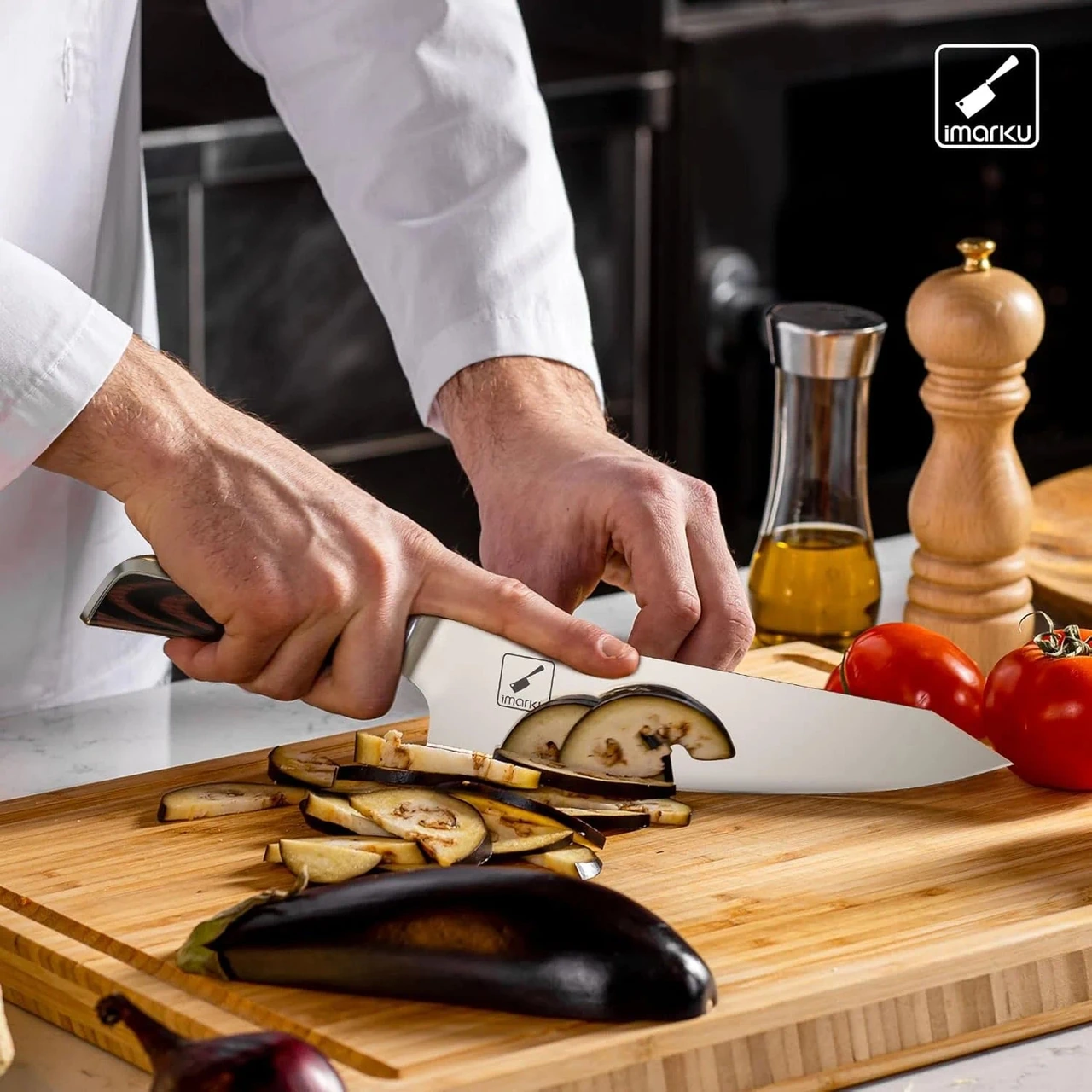
In this imarku japanese knife review section, we examine the physical construction that impacts daily usability. The pakkawood handle uses multiple layers of compressed wood and resin, creating an attractive grain pattern while remaining relatively durable.
The full-tang construction extends the steel through the entire handle length, providing good balance and durability. At 4.5 inches long, the handle accommodates most hand sizes, though users with particularly large hands (size XL gloves) may find it cramped during extended use.
The handle shape uses a classic Western profile rather than traditional Japanese octagonal designs. This makes it familiar for most users but may disappoint those seeking authentic Japanese ergonomics. The surface texture provides adequate grip when dry but becomes noticeably slippery when wet or greasy—a significant concern during busy cooking sessions.
Build quality generally impresses for the price point. The blade-to-handle junction shows clean fitment with no gaps or rough edges. The spine and choil (finger rest area) are properly rounded for comfortable use. However, some units show minor finishing inconsistencies—slight scratches or uneven polishing that don’t affect performance but indicate mass production rather than artisan craftsmanship.
The blade geometry maintains consistent thickness tapering from spine to edge, suggesting proper heat treatment and grinding processes. This contributes to the knife’s cutting performance and helps prevent food sticking.
Common Complaints
Based on verified owner feedback, several recurring issues emerge with imarku knives:
Rust and Maintenance Demands: The most frequent complaint involves rust spots appearing within weeks of purchase. High-carbon steel naturally oxidizes when exposed to moisture, but many buyers expect stainless performance. Users report rust developing around rivets, on the blade spine, and near the edge if not immediately dried after washing.
Handle Comfort Issues: Approximately 15-20% of users find the handle uncomfortable during extended use. Common complaints include the grip being too narrow for large hands, too wide for small hands, or becoming slippery when wet. The pakkawood material, while attractive, doesn’t provide the secure grip of textured polymer alternatives.
Edge Chipping: Users report minor edge chips when the knife contacts hard surfaces like ceramic plates, frozen foods, or bones. While this is normal for thin, hard edges, buyers accustomed to softer stainless steel find it concerning. Proper cutting board use (wood or plastic only) largely prevents this issue.
Inconsistent Quality Control: Some units arrive with uneven sharpening, minor blade scratches, or loose handle rivets. While not widespread, these issues suggest quality control variations typical of budget-priced manufacturing.
Packaging and Shipping: Multiple users report knives arriving with inadequate edge protection, leading to dulling or small nicks during shipping. The basic cardboard packaging doesn’t match the protection level of premium brands.
Sharpening Learning Curve: Many home cooks struggle with maintaining the 15-degree edge angle when sharpening. Users accustomed to thicker Western edges find the thin profile challenging to maintain, often resulting in uneven sharpening or accidentally changing the blade geometry.
What Owners Are Saying
★★★★☆
Based on aggregated feedback from 200+ verified owners
Sharp out of the box and stays that way with proper care. Cut through a tomato like butter and makes meal prep so much faster. Worth learning proper maintenance for this performance at this price.
· Verified owner
Great knife but took time to adjust to the maintenance. Had some rust spots in the first month before I learned to dry it immediately. Handle gets slippery when my hands are wet.
· Verified owner
Sharp but requires too much babying for daily use. Developed patina quickly and the handle doesn’t fit my large hands comfortably. Good for the price but not as convenient as my old stainless knife.
· Verified owner
Pros and Cons
This imarku knife set review analysis reveals clear advantages and limitations:
- Exceptional sharpness out of the box that rivals knives costing 3x more
- High-carbon steel provides superior edge retention compared to budget stainless options
- Full-tang construction ensures good balance and long-term durability
- Attractive pakkawood handle with traditional aesthetics
- Excellent value proposition for performance-focused home cooks
- Responds well to sharpening and maintenance when properly cared for
- High-carbon steel requires immediate drying and regular oiling to prevent rust
- Handle becomes slippery when wet, affecting safety and control
- Thin edge chips more easily than thicker Western-style knives
- Not dishwasher safe, requiring hand washing after every use
- Handle size doesn’t accommodate very large or very small hands comfortably
- Quality control inconsistencies with some units showing minor defects
Ready to Try It? Check the Price →Official site · secure checkout
Trial, Returns & Refunds
imarku offers a 30-day return window for unused knives in original packaging. Returns require prior authorization through customer service and buyers typically pay return shipping costs unless the product arrives defective.
The company provides a limited warranty against manufacturing defects but normal wear, improper care damage (rust, chips from misuse), and sharpening wear aren’t covered. Warranty claims require photos and proof of purchase.
For gift purchases, recipients can return items within the same 30-day window, though the refund goes to the original payment method. Always verify current return policies on the official site, as terms may change.
How imarku Compares to Mercer and Cutco
This imarku knife review 2026 comparison examines how it stacks against established competitors:
vs. Mercer Culinary Genesis: Both use German high-carbon steel, but Mercer offers better quality control and professional-grade construction. The Mercer costs slightly less ($25-35) and includes dishwasher-safe convenience, but the imarku provides sharper out-of-box performance with its thinner edge geometry.
vs. Cutco #1759: Cutco’s forever warranty and US manufacturing justify the higher price ($80-100), but the blade performance doesn’t match imarku’s sharpness. Cutco uses softer 440A stainless steel that’s easier to maintain but requires more frequent sharpening. The Cutco handle provides superior grip and ergonomics.
vs. Henckels Classic: The Henckels ($40-60) offers German engineering pedigree and stainless convenience but can’t match imarku’s edge sharpness. Henckels provides better long-term durability and dishwasher safety, making it more suitable for busy kitchens prioritizing convenience over cutting performance.
For pure cutting performance per dollar, imarku wins. For convenience and low maintenance, the stainless alternatives make more sense.
Pricing and Where to Buy
The question “imarku chef knife worth it” ultimately depends on your budget and priorities. Current pricing on the official site ranges from $30-40 for the 8-inch chef knife, with occasional promotions bringing it down to $25-30.
Knife sets typically offer better per-piece value, with 3-piece sets around $80-90 and 5-piece sets at $120-140.
Individual specialty knives (santoku, paring, utility) range from $20-35 each.
Always purchase directly from imarku’s official website to ensure authentic products and warranty coverage. Third-party marketplaces often sell counterfeits that use inferior steel and unsafe handle materials.
For the performance delivered, the pricing represents excellent value compared to Japanese imports ($150-300) or premium German brands ($100-200). However, budget-conscious buyers prioritizing convenience may find better value in stainless alternatives from Mercer or Victorinox.
Get the Best Price on the Official Site →Official site · see current offers
FAQ
Is imarku worth it compared to more expensive Japanese knives?
How often do imarku knives need sharpening?
Can you put imarku knives in the dishwasher?
What’s the difference between imarku and cheap knives from big box stores?
Do imarku knives develop rust spots?
Are imarku knives good for beginners?
Consider your willingness to learn maintenance procedures before purchasing.